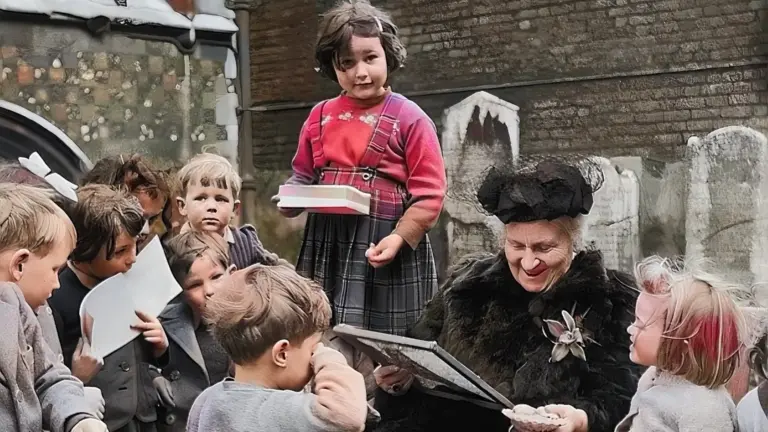
Maria Montessori was a pioneer as well as an innovative educator. She developed methods that revolutionized the concepts of education. Montessori was born in 1870 in Italy, a doctor and one of the first female physicians in her country. It then became completely dedicated to her philosophy of approach toward education.
Montessori first began to work with children in the early 1900s. She founded the first Casa dei Bambini in a poor area of Rome. Here she brought into play both her observation and her theories of child development. According to her, children learn best in environments allowing their independence and natural curiosities to thrive.
The Montessori method soon gained popularity and recognition. Children performed better by exploring instead of passively receiving knowledge. The children chose the activities themselves and learned from this environment. This is how the Montessori method allowed them to develop at their own speed.
Montessori is a philosophy with deep respect for the child. Maria Montessori regarded all children as persons of great potential. Her methods aimed at nurturing this potential through the provisions of materials and guidance.
One of the key aspects of the Montessori method is the developing of pedagogical materials which are simple and intuitive, and easy for the children to use them. Through them, children are able to comprehend difficult concepts, facilitated by concrete manipulation; for example, Montessori developed materials like the pink tower and bead chains for mathematical concepts.
Another aspect which Montessori emphasizes is the study environment prepared for the children. Maria Montessori made the classroom a peaceful and inspirational learning arena, wholly furnished with furniture of children’s size together with children-accessible materials. Doing so it fosters independence and the love for learning.
A further quality of Montessori’s work is that the role of the teacher is very important. She says that a teacher is a guide, an observer. Teachers assist the children by offering materials and support. They do not dictate or control the process of the children’s learning process. Such approach leads the children to autonomy and self confidence.
The Montessori learning method is timeless. Because of that today you can visit a Montessori kindergarten or school almost anywhere in the world. The span of her influence runs far greater than any classroom.
Although Montessori had great success, she was being thrown against setbacks all the time. There were times when her methods were met with skepticism and rejected. The critics blamed the method as an unstructured one. But nothing stopped Montessori in her effort.
The great legacy of Maria Montessori revolutionized the attitude toward the development and understanding of children. Respect, relational pedagogy, and independence are the core values of her pedagogy and are appreciated all around the planet.